BY: JERIC YURKANIN
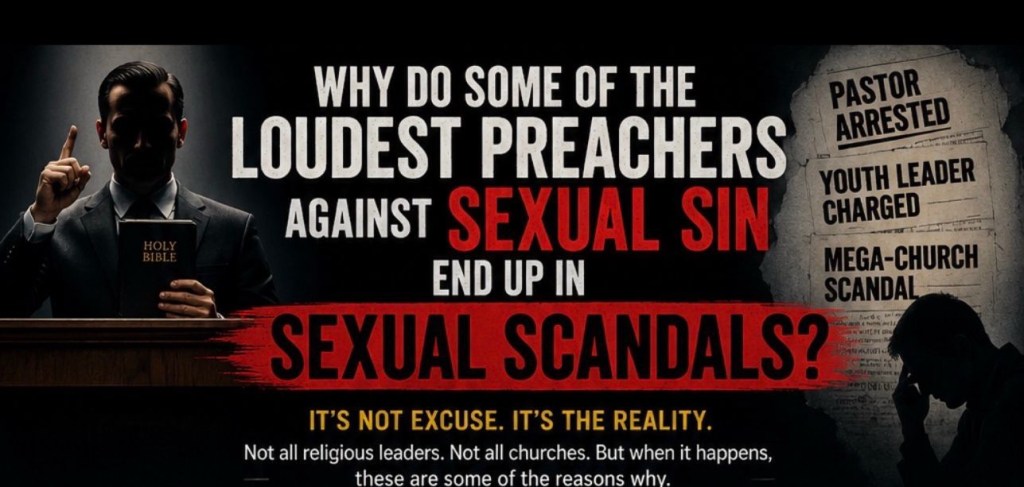
Few things shock people more than discovering that a pastor, priest, evangelist, youth leader, or religious figure who spent years preaching against sexual sin has been accused or convicted of sexual misconduct, abuse, molestation, or exploitation. Every time another scandal breaks, many people ask the same question: How can someone who talks about God, morality, purity, and righteousness every week engage in behavior that directly contradicts everything they preach?
The question is not new. Throughout history, religious institutions around the world have faced scandals involving leaders who publicly promoted virtue while privately engaging in behavior they condemned. This does not mean that all religious leaders are hypocrites. In fact, most clergy and religious volunteers never commit such crimes. However, the repeated appearance of these scandals raises important questions about human nature, power, accountability, and the ways people can deceive both others and themselves.
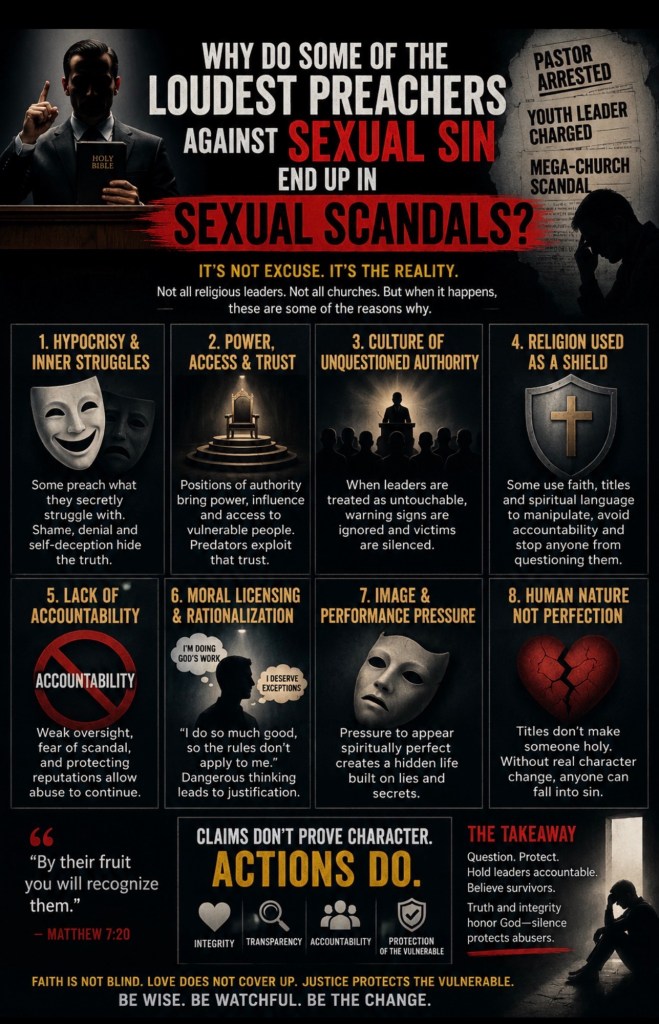
One explanation is that preaching about morality and actually living a moral life are two different things. Human beings are often complicated and contradictory. People sometimes publicly condemn behaviors they privately struggle with. A person may sincerely believe what they are preaching while simultaneously failing to live up to those standards. This does not excuse harmful behavior, but it helps explain why public statements and private actions do not always match.
Psychologists have long recognized that people often hide parts of themselves that they fear others would reject. In highly conservative religious environments, sexual thoughts, desires, and struggles may be treated as shameful or dangerous. Instead of addressing those feelings in healthy ways, some individuals suppress them. Suppression does not make desires disappear. In some cases, buried struggles can emerge in unhealthy and destructive ways.
Power is another major factor. Child abuse experts frequently point out that abuse is often less about sex and more about power, control, and access. Religious leaders often occupy positions of enormous trust. Parents trust them. Congregations trust them. Communities trust them. They may be viewed as spiritual authorities whose words carry significant weight. For predators, that trust can become a tool for manipulation.
The tragic reality is that predators often seek environments where people are unlikely to question them. Religious organizations are not the only places where this occurs. Schools, sports programs, youth organizations, and families can also become settings where abuse occurs. Wherever adults have authority over vulnerable people, safeguards and accountability become essential.
Another factor is the culture of unquestioned authority that sometimes develops around charismatic leaders. When a pastor or religious figure is treated as if they are above criticism, warning signs can be ignored. Members may be reluctant to challenge them because they fear being labeled rebellious, disloyal, or lacking faith. In some situations, victims themselves are pressured into silence because the reputation of the institution is prioritized over the protection of vulnerable people.
History shows that institutions often struggle to confront wrongdoing within their own ranks. Religious organizations are not unique in this regard. Governments, corporations, schools, sports leagues, and political parties have all been guilty of protecting powerful individuals at the expense of victims. Human beings naturally want to defend groups they identify with, even when evidence suggests serious problems exist.
Some experts also point to what psychologists call moral licensing. This occurs when people convince themselves that because they have done good things, they deserve exceptions to the rules. A religious leader who spends years serving others may gradually begin to believe that ordinary standards no longer apply to them. Such thinking can create a dangerous path toward rationalization and abuse.
There is also the issue of image management. Religious leaders often face intense pressure to appear spiritually successful. They may feel unable to admit doubts, struggles, addictions, or personal failures. Instead of seeking help, some create a public image that hides their private reality. Over time, maintaining that image becomes more important than confronting the truth.
Ironically, the Gospels themselves contain repeated warnings about religious hypocrisy. Jesus frequently challenged religious leaders whom he believed focused on outward appearances while neglecting justice, compassion, honesty, and humility. Some of his strongest criticisms were directed not toward ordinary sinners but toward religious authorities who presented themselves as morally superior while failing to practice what they preached.
One of the most difficult realities for many believers is recognizing that claiming faith does not automatically transform a person’s character. A person can quote scripture, preach powerful sermons, pray publicly, and speak passionately about God while still being capable of deception, manipulation, and wrongdoing. Human beings remain human beings regardless of their religious titles.
The emotional damage caused by abuse scandals extends far beyond the immediate victims. Survivors often carry trauma for years or decades. Families lose trust. Congregations become divided. Some believers lose faith altogether. Others struggle to separate their spiritual beliefs from the actions of those who betrayed them.
Many people ask how someone could commit terrible acts while claiming that Jesus lives within them. Different religious traditions answer this question differently. Some argue that such individuals were never truly transformed. Others believe that sincere believers can still commit serious sins. Regardless of theology, the practical lesson remains the same: claims should never be accepted as proof of character.
Actions matter more than slogans. Titles matter less than behavior. The true measure of a leader is not how loudly they preach about morality but how consistently they demonstrate integrity, humility, accountability, and concern for others when nobody is watching.
The existence of abuse scandals does not prove that every religious leader is corrupt, nor does it prove that religion itself is false. What it does reveal is a reality that exists across all human institutions: power without accountability can become dangerous. Whenever individuals are elevated beyond criticism, the risk of abuse increases.
The lesson for modern society is not simply to distrust religion. The lesson is to be cautious about giving any person unchecked authority. Whether the leader is a pastor, politician, celebrity, teacher, coach, business executive, or social media influencer, the same principles apply. Transparency, accountability, and the willingness to question authority are essential safeguards against abuse.
Perhaps the most important lesson is that people should be judged by their actions rather than their claims. Anyone can say they love God. Anyone can quote scripture. Anyone can preach about morality. The harder task is living with honesty, compassion, humility, and integrity every day. History repeatedly reminds us that those qualities—not religious titles or public declarations—are the truest indicators of character.
 ANCIENT ECHOES PODCAST: WHY I NO LONGER BELIEVE IN GOD (JESSUP PA)
Leave a comment