AUTISTIC VERSION — AGAPE FREEDOM CHURCH
By Rev. Jeric Yurkanin
It’s Thanksgiving —
and for many autistic people, this day feels both meaningful and overwhelming.
The noise.
The smells.
The conversations happening all at once.
The pressure to “be social.”
The sudden changes in routine.
The sensory overload that nobody else seems to notice.
And yet… there is still something beautiful about this day
when we slow down enough to see it the way our brains naturally do:
literally, honestly, deeply, intensely.
We don’t do fake gratitude well.
We don’t do forced small-talk well.
We don’t do sugar-coated versions of anything well.
But we do understand truth.
We understand justice.
We understand noticing the details others ignore.
We understand remembering the parts of the story people try to skip.
So today, we take a breath —
not the social holiday breath everyone expects,
but a breath that helps our nervous system regulate and come back into our body.
We sit with our blessings in a way autistic people often do:
quietly, observantly, gratefully, intensely aware of how fragile life is.
We know we’re only promised this one life.
We know routines can shatter.
We know people come and go.
We know honesty is the most sacred thing we have.
And because of that, our calling —
as Jesus-shaped people and autistic truth-tellers —
is to leave this world a little more healed, a little more kind,
and a lot more honest than how we found it.
But honoring God with gratitude also means telling the truth…
even when everyone else wants the comfortable version.
Because thanksgiving without honesty is just pretending.
And autistic people?
We don’t pretend well.
Thanksgiving with honesty is worship.
🧩 Acknowledging the Land — In the Way Autistic Minds See It
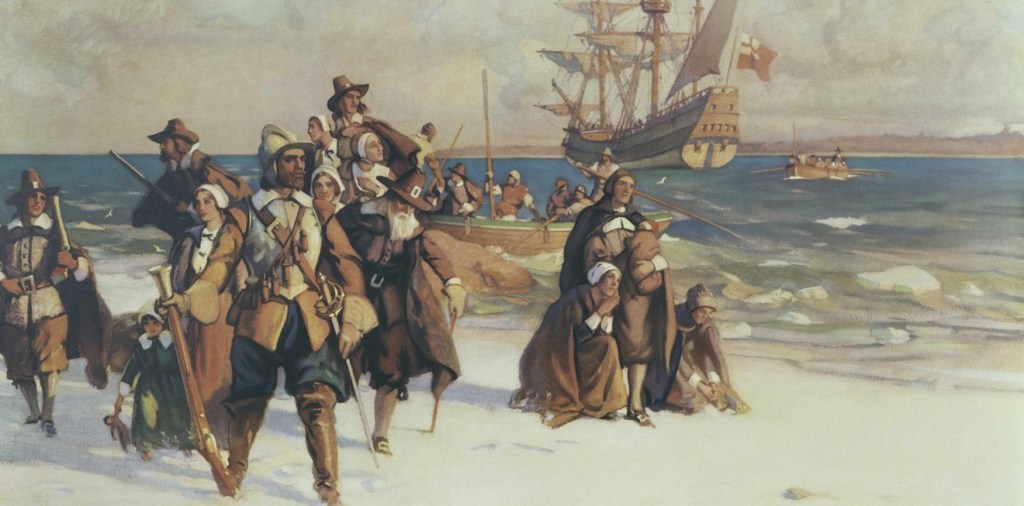
Before Pilgrims.
Before colonial prayers.
Before America romanticized the “first Thanksgiving”…
There were Native families.
Real people.
With routines, traditions, sensory-rich cultures, languages, songs, and stories.
The land wasn’t “empty.”
It wasn’t “waiting for settlers.”
It wasn’t a playground for Christian colonists.
Many Native communities were traumatized, displaced, and killed
by European settlers — including Christian Pilgrims
who believed God gave them the right to take land that wasn’t theirs.
Autistic honesty won’t let us look away from that.
But honesty doesn’t mean shame.
It means responsibility.
Responsibility to remember.
Responsibility to learn truthfully.
Responsibility to live differently and more compassionately.
Jesus said, “The truth will set you free.”
Not the polished version.
Not the patriotic version.
Not the church-approved version.
Just the truth — raw and unaltered.
Because love cannot heal anything we are unwilling to name.
And autistic people?
We name what others avoid.
🧩 Scripture Through an Autistic Lens
📖 1 Timothy 4:4–5
Everything God created is good.
Autistic people take that literally —
which means Native lives, cultures, languages, and histories are good too.
God never labeled anyone “less than.”
📖 Psalm 100:4
Enter His gates with thanksgiving.
For autistic people, thanksgiving often means quiet gratitude,
not loud rooms or forced group prayers.
Gratitude looks like justice.
Honesty.
Respect.
Not performance.
📖 Colossians 2:6–7
Rooted… built up… overflowing with thanksgiving.
Autistic gratitude is rooted and real.
Not shallow.
Not scripted.
Not socially expected.
Real gratitude makes us harder to manipulate
by political narratives or religious systems that harm others.
Thanksgiving isn’t a single day for us.
It’s a way of existing —
seeing beauty in details, truth in history,
and God in the people the world ignores.
🧩 The Agape Freedom Calling — Autistic Edition
So today, as we sit at our tables, manage sensory input,
and navigate family expectations…
Let’s also hold this:
We can love America and still tell the truth about how it was built.
We can celebrate Thanksgiving without celebrating the myths.
We can be grateful and still acknowledge harm.
We can honor Native and Black Native communities
without losing joy or connection.
Autism isn’t a barrier to gratitude.
It’s a lens that makes gratitude clearer —
stripped of social pressure
and rooted in truth, justice, and compassion.
This Thanksgiving, may we practice a gratitude
that feels safe in our bodies,
honest in our minds,
and rooted in love.
Because freedom — real freedom —
is built on truth.
PART 2 — AUTISTIC VERSION OF THE REAL HISTORY
🧩 THE REAL STORY — WITHOUT THE SOCIAL FILTERS
Most autistic people grew up confused by the “Thanksgiving story”
because it didn’t make logical sense.
Why would Native people joyfully hand over land?
Why would everyone sit smiling at a table
with people who carried weapons?
Why did the story feel too clean, too polished, too unrealistic?
Because it was.
Autistic people rely on truth, pattern recognition,
and details — not fairy tales.
So here is the truth, plainly:
🧩 BEFORE THE PILGRIMS — A DEVASTATED LAND
Before the Pilgrims arrived in 1620,
a European-borne plague had already killed up to 90%
of the Wampanoag Nation.
So when the Pilgrims arrived, the land wasn’t “empty.”
It was grieving.
They weren’t entering a “New World.”
They were entering someone else’s home
after most of the family had died.
Autistic honesty refuses to call that “discovery.”
🧩 THE REAL “FIRST THANKSGIVING”
The Wampanoag taught the Pilgrims how to survive.
Not because they wanted to be best friends —
but because survival required alliances.
The “feast” happened because:
• Pilgrims fired guns celebrating
• Wampanoag warriors thought they were under attack
• They came armed
• They stayed to negotiate
• They shared food
It wasn’t unity.
It was tension, diplomacy, and caution.
Kindergarten plays left that part out.
🧩 AFTER THE FEAST — THE TRUTH AMERICA HIDES
Once the Pilgrims gained strength:
• Land was taken
• Treaties were broken
• Violence escalated
By 1675, King Philip’s War shattered the region.
Pilgrim descendants:
• burned Native towns
• enslaved Native families
• murdered communities
• sold survivors to plantations
Autistic minds don’t ignore patterns.
The pattern was colonization → dependence → betrayal → violence.
🧩 RELIGION WAS USED AS JUSTIFICATION
The Pilgrims believed they were God’s chosen people.
When you think God gave you a land,
you stop asking permission.
Religion became:
• the moral shield
• the political tool
• the justification
• the loophole
• the excuse
Same pattern later used for:
• slavery
• segregation
• boarding schools
• cultural erasure
We’re not attacking faith —
we’re telling the truth autistic-clear:
Faith was used to harm.
Truth sets us free.
Lies keep us stuck.
🧩 SO HOW DO WE HOLD THIS AS AUTISTIC BELIEVERS?
We don’t have to cancel Thanksgiving.
We don’t have to sit in guilt.
We don’t have to reject joy.
But autistic people need the truth
to make sense of the world.
Truth increases empathy.
Truth prevents repeated harm.
Truth honors those who suffered.
Real gratitude doesn’t hide history.
It learns from it.
So today, practice the kind of gratitude autistic systems thrive in:
• honest
• calm
• compassionate
• grounded
• unmasked
• unfiltered
• real
That’s the kind of thanksgiving
that actually means something.
THANKSGIVING PRAYER
Agape Freedom Church
God of peace,
God of truth,
God who meets us exactly where we are…
Today we slow our breathing.
We quiet our mind.
We let our body settle into a place that feels safe.
We don’t force ourselves to be “festive.”
We don’t pretend we’re okay if we’re overwhelmed.
We don’t mask how we’re really feeling.
You meet us in truth.
And truth is holy.
Thank You for this moment of stillness.
Thank You for the breath in our lungs.
Thank You for the comfort of familiar routines,
and the courage to handle disruptions when they come.
Today, we ask for gentle things:
✨ Calm in our body.
✨ Clarity in our mind.
✨ Softness in our environment.
✨ Space when we need space.
✨ Understanding from others.
Let this day not be about noise, or pressure, or social expectations—
but about small blessings we can actually hold:
A warm drink.
A quiet corner.
A familiar texture.
A safe person.
A peaceful moment.
A truth that settles instead of overwhelms.
We honor gratitude in a way that feels real to us—
not forced, not showy, not loud.
Just real.
Help us notice the little things:
the steady breath,
the gentle light,
the simplicity of being alive,
the peace that comes when we let ourselves be exactly who we are.
And God…
for anyone who is overloaded, exhausted, or anxious today—
wrap them in calm.
Give them permission to step away.
To rest.
To stim.
To speak up.
To say “I need a break.”
To be human without apology.
Thank You for making us the way we are—
deep feelers, pattern-noticers, truth-tellers,
people who love differently but deeply.
Thank You for freedom.
Thank You for honesty.
Thank You for our breath, our body, and this quiet moment with You.
Amen.
 Agape Freedom Community
Leave a comment